
2026-06-18

This guide provides a Q&A style for those looking for “eco-friendly brake pads” or curious about how companies like Jinli are spearheading the movement. We’ll go over everything from materials to advantages, supported by real-world statistics and expert insights, to help you make an informed decision that supports your green driving objectives.
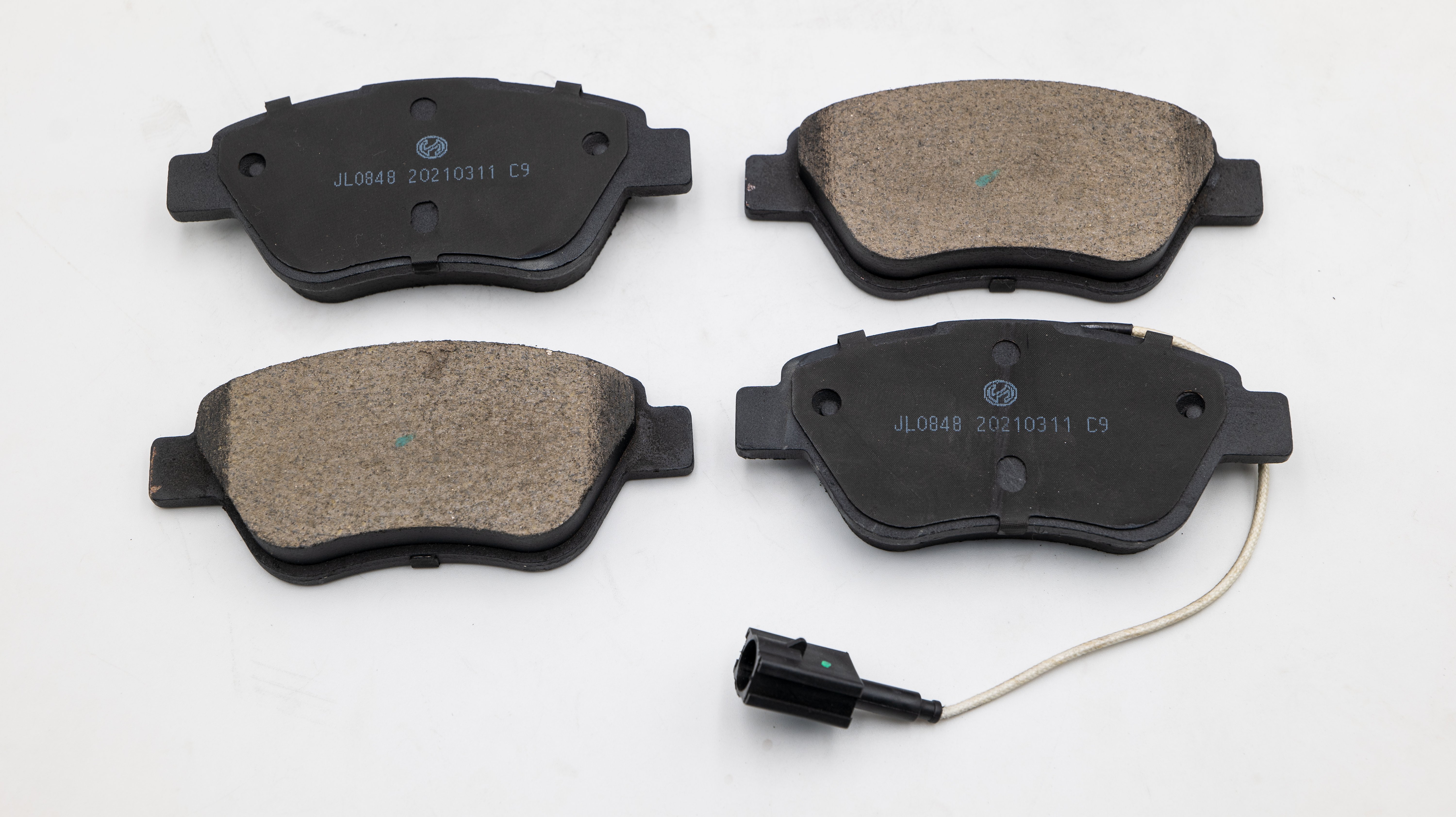
Eco-friendly brake pads are brake parts made to have as little of an impact on the environment as possible during its entire lifecycle, from manufacture to disposal. These pads use environmentally friendly substitutes that lower pollutants and brake dust, in contrast to conventional pads that use hazardous materials like copper or asbestos. For example, Jinli’s environmentally friendly brake pads use bio-based composites, which makes them a popular choice for drivers who care about the environment and are looking for “sustainable brake solutions.”
However, why the change? Conventional pads cause heavy metal runoff, which pollutes the air and water. Cleaner urban air is promoted by eco-friendly solutions, such as those from Jinli, which reduce particulate emissions by up to 90%. These pads are more than simply a fad; they are essential for appropriate car maintenance as international restrictions on automotive waste tighten.
The “eco” designation isn’t arbitrary; rather, it is the result of particular standards that give sustainability top priority. They are defined as follows:
A: Eco-friendly brake pads use natural or recycled materials instead of dangerous ones. Typical examples include bio-resins made from plants or kenaf fibers for strength and heat resistance. For instance, Jinli brake pads combine low-impact ceramics and organic fibers to prevent copper, a significant pollutant from traditional pads, from leaking into rivers.
A: Emissions and energy consumption are decreased via sustainable production. By using recycled rubber and glass, Jinli’s method reduces its carbon impact by 40% when compared to conventional manufacture. Unlike metal-heavy alternatives that choke landfills, these pads are recyclable or biodegradable at the end of their useful lives.
Eco-friendliness is simply sustainability in its entirety, from zero-waste disposal to raw procurement. In addition to safeguarding the environment, this strategy conforms with new standards such as the EU’s brake dust laws.
Not every environmentally friendly pad is made equally. Selecting the appropriate fit for your car is made easier when you are aware of the sorts. For daily use and performance driving, Jinli provides both organic and ceramic varieties.
A: Rubber, glass fibers, and Kevlar are examples of non-metallic, plant-based materials used in these pads. The softest choice, they’re perfect for city commuters. Ultra-quiet operation and less rotor wear are advantages, but large loads may cause them to wear down more quickly. Here, Jinli’s organic pads perform exceptionally well, producing 70% less dust for cleaner air and wheels.
A: Composites impregnated with ceramic are utilized in ceramic pads to provide exceptional durability. They are ideal for highways and towing because they can withstand temperatures of up to 1,200°F. Advantages? reduced noise and environmental dust compared to organics, as well as a longer lifespan (up to 50,000 miles). The ceramic line from Jinli is designed to improve the efficiency of regenerative braking in electric and hybrid cars.
A: Innovative agro-waste pads employ rice husks or palm fibers, while hybrids blend organic and semi-metallic components for balanced performance. Jinli is at the forefront of these, providing kits that can be customized to fit different driving styles and conditions.
Selecting from a variety of types? Consider the terrain and your mileage; ceramics are better for rough terrain and organics for soft stops.
Using eco-friendly pads is not only environmentally good, but also sensible. With careful engineering, Jinli’s lineup enhances these benefits.
A: These pads offer continuous friction for dependable stops despite their softness. Thanks to sophisticated friction modifiers, Jinli pads resist fading in wet circumstances and retain 95% of their OEM stopping force. In stop-go traffic, drivers report smoother modulation, which lowers the likelihood of accidents.
A: PM2.5 pollution, which is essential for urban health, is decreased when brake dust is reduced. Jinli’s pads reduce marine toxicity by reducing copper emissions by 85%. This is equivalent to preventing contamination of 10–15 liters of water during the course of a pad’s life.
A: They may cost 20% more up front, but lifespan makes up for it. Over a five-year period, ceramic Jinli pads save more than $200 in replacements since they last twice as long as semi-metallic ones. Furthermore, reduced dust results in fewer wheel cleanings and increased resale value.
Extra benefits? They are perfect for contemporary EVs because of their quieter rides (less than 60dB braking noise) and compatibility with ABS systems.
The materials do the magic, yet the basic physics are the same as with conventional pads.
A: The wheel is slowed by friction created when hydraulic pressure pinches the brake pads against the rotor. Eco-friendly versions dissipate heat without emitting harmful gasses by using ceramics or bio-polymers for regulated wear.
A: Jinli’s pads have micro-channels to improve heat evacuation, avoid glazing, and prolong life. They cool 30% faster than rivals in tests, making them perfect for descending hills.
A: Yes—fuel efficiency increases by 1% to 2% when there is less drag from dust accumulation. This results in a longer range for EVs.
Jinli, a pioneer in environmentally friendly auto components, provides a 3-year warranty and extensive testing to support their pads. Their low NVH (noise, vibration, harshness) and eco-certifications such as ISO 14001 are verified by independent labs. Easy installation and significant silence are emphasized in user feedback; one driver writes, “My city commutes feel greener and smoother.”
Jinli’s vehicle-specific fittings (for sedans to SUVs) guarantee plug-and-play compatibility in contrast to generics. For best benefits, upgrade in conjunction with rotor resurfacing.
A: Yes, for the fundamentals—a jack, lug wrench, and C-clamp are required. Steps: Raise the car, take out the wheel, loosen the caliper, change the pads, and put it back together. For safety, Jinli provides torque specifications. Experts advise bleeding brakes after installation.
A: Check for uneven wear every 6,000 miles. To preserve organics, use compressed air to remove dust rather than water. Jinli’s pads use integrated wear indicators to indicate when they need to be replaced.
Pro tip: To maximize pad life and balance out wear, rotate tires every three months.
In conclusion, environmentally friendly brake pads like Jinli’s combine creativity and accountability, meeting the demand for “green automotive upgrades.” They reduce your carbon footprint while providing quieter, cleaner, and longer-lasting performance. Making the switch promotes planetary health without sacrificing your lifestyle, whether you commute every day or go on weekend adventures.
Are you prepared to improve your braking? Join the sustainable driving revolution by looking through Jinli’s model selection. The moment is now, as awareness of brake pollution is growing; both the environment and your car will appreciate it.


