
2026-10-19

Nevertheless, the braking performance, feel, and longevity of these components are substantially influenced by their compound, shape, thickness, and backing plate design in the context of everyday commuting, spirited street driving, or track sessions. The pedal response and stopping force are influenced by the selection of ceramic, semi-metallic, or organic formulations. Therefore, what information should you be aware of prior to upgrading your performance brake pads?
In conventional configurations, brake pads are passive components that lack moving elements. They are engineered blocks of friction material that are affixed to a metal backing plate. In the majority of vehicles, they are constructed from sophisticated composites rather than conventional rubbers or metals, which guarantees consistent performance under high temperatures and pressure.
The primary function of brake pads is to generate friction against the brake rotor when the caliper compresses them, thereby converting kinetic energy into heat and thereby slowing down the vehicle. The caliper, which is typically mounted near the tire hub, is where they are positioned, enabling them to effectively grip the rotating rotor. Although certain specialized or older vehicles may have distinctive configurations, the fundamental principle remains: pads provide the clamping force required for controlled pauses.
However, brake pads are not merely assembled; they are meticulously engineered. Manufacturers choose specific friction compounds and subsequently mold, cure, and chamfer them to meet precise specifications. Vibrations or asymmetrical wear may result from even minor unevenness in the contact between each pad and the rotor. In order to mitigate the initial bite noise, the friction surface is frequently beveled, and the supporting plate is coated to prevent corrosion. Pads are subjected to extreme conditions: they must maintain a consistent torque while resisting glazing, splitting, or fading, despite temperatures exceeding 500°F that are generated by repeated clamping.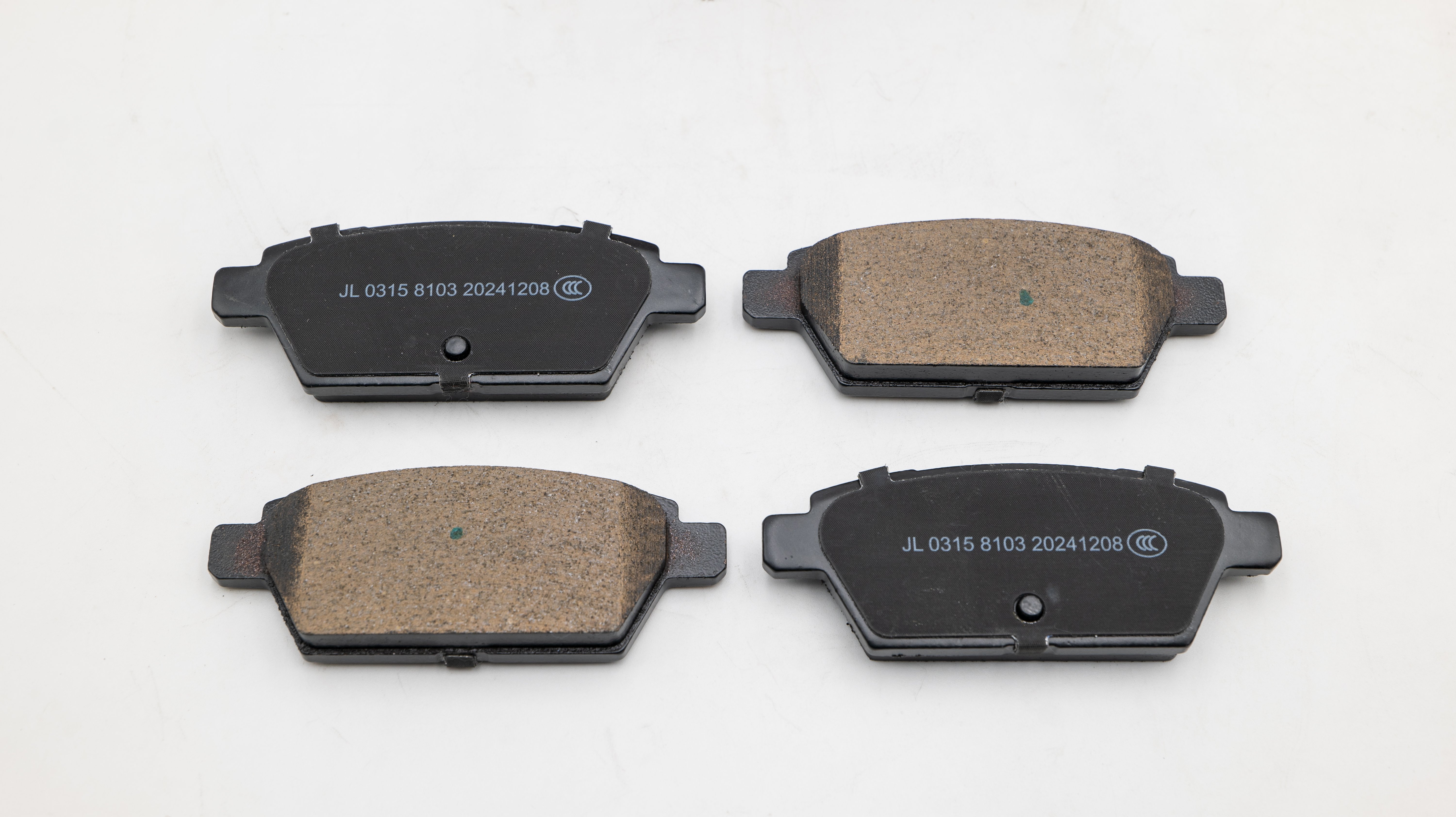
The majority of contemporary performance brake pads employ multi-layer designs that incorporate slots or chamfers to disseminate heat, grime, and gases. Although basic vehicles may continue to use simplified organic pads on their rear axles, high-performance models necessitate advanced ceramic or carbon-infused compounds to achieve superior heat management and fade resistance.
The primary function of brake pads is to produce consistent friction; however, the requirements of a daily commuter are significantly different from those of a track-day enthusiast. Pads are subjected to a distinct level of stress in urban stop-and-go traffic than they are during high-speed braking at speeds exceeding 100 mph. Before selecting performance brake pads, evaluate your driving style: is it characterized by casual highway miles, aggressive canyon contouring, or competitive autocross? This directs you to pads that possess critical characteristics such as minimal noise, consistent friction, and thermal stability.
In order to ensure safety, performance applications necessitate pads that can endure repeated, aggressive pauses. Overheating can result in the friction material glazing, which reduces traction and results in longer stopping distances. In severe cases, brake fade is initiated, resulting in a decrease in power and a softening of the accelerator. Consequently, thermal dissipation is of the utmost importance. Predictable performance is guaranteed by pads that maintain a consistent friction coefficient (mu) over a broad temperature range, typically from 100°F to 1,000°F.
At the core of any high-quality performance brake pad is its compound. Traditional organic pads employ non-asbestos fibers, resins, and rubbers to achieve silent, smooth stops; however, they degrade rapidly when exposed to heat. Steel wool, iron powders, and graphite are combined in semi-metallic pads to provide durability and impact, making them an excellent choice for heavier vehicles. Nevertheless, ceramic brake pads are the primary component of performance enhancements, consisting of ceramic fibers, non-ferrous fillers, and bonding agents. Ceramics are superior in heat dissipation, operating at a lower temperature than metals to prevent brake fluid boil-off and decline. Calipers and rotors are safeguarded from excessive heat by their lower thermal conductivity, which keeps heat localized.
Carbon additions further elevate ceramics, improving their hardness and wear resistance, resulting in a lengthier lifespan of over 50,000 miles, as opposed to the 30,000 miles of standard pads. High-mu ceramic variants enhance the initial bite, resulting in shorter stops, while dust-free formulations reduce wheel contamination. In addition to composition, supporting plates are crucial: steel provides rigidity, while aluminum reduces weight. Anti-rattle clips guarantee a secure connection, while shims mitigate vibrations.
The influence of weight on pads is more subtle than that of rotors; however, lighter compounds reduce rotational inertia, which facilitates a faster response. Premium padding combine robust yet lightweight backings with thin, high-friction layers to optimize unsprung mass. Modular designs are refined by aftermarket specialists, which facilitate effortless replacements without the need for complete caliper disassembly.
The design and compound of performance brake pads are distinct, with each type being optimized for particular applications. The following is a breakdown to assist you in selecting the appropriate set for improved halting power.
Organic padding, which are composed of natural rubbers, glass fibers, and Kevlar-like aramid reinforcements, serve as the foundation for numerous factory configurations. They are cost-effective, quietly operating, and generate minimal dust, which facilitates tire cleaning. Nevertheless, they become brittle when exposed to heat, rendering them unsuitable for use on the track. Organic pads are suitable for light-duty commuters or rear axles where fade is not a concern. They provide a progressive sensation, but they necessitate frequent replacements, typically every 20,000-40,000 miles.
Semi-metallic pads provide thermal tolerance and an aggressive bite up to 650°F by combining 30-65% metals such as copper, iron, and steel with resins. They are conductive, which enables them to perform well in damp conditions, and they are durable, with a lifespan of 40,000-70,000 miles. The compromise? Increased noise and rotor fatigue due to metallic content. These are particularly effective in street-performance vehicles, SUVs, or trucks that require a robust initial response, without the hefty price tag associated with ceramics.
Clay-based ceramics are infused with synthetic filaments and minimal metals to create ceramic brake pads, which are the gold standard for performance. They generate 80-90% less particulate than organics, resist fade, and operate at a lower temperature (under 500°F peak). They offer linear pedal sensation for confident modulation, with consistent mu ratings ranging from 0.35-0.45. They are rotor-friendly and have a lifespan of 50,000-80,000 miles. Sub-variants consist of:
Ceramics are suitable for 90% of performance enhancements, as they effectively balance street manners with track capability.
With a 10-20% metal content, these bridge organics and semi-metallics, which provide superior thermal resistance in comparison to pure organics. In extreme use, they degrade more rapidly, but they are quieter than full metallics. This is an excellent budget option for mixed transportation.
Upgrading to performance brake pads? Ceramic or semi-metallic: Which is superior? Both outperform stock organics; however, context is crucial.
For enthusiasts and daily drivers, ceramics are the superior choice due to their superior fade resistance, which reduces the duration of stops by 5-10% during repeated deceleration, as demonstrated by dynamometer tests. Their service life is extended by even wear, while their low dust and noise levels improve comfort. Semi-metallics, which are ideal for off-roading or towing, initially bite harder. However, they squeal under low loads and consume rotors at a faster rate.
Carbon ceramic composites from ceramics are currently the most prevalent, capable of withstanding temperatures exceeding 1,000°F without the need for glazing. Semi-metallics are more effective at dispersing water in wet climates, while ceramics are more stable in high-heat, arid environments. Neither of these methods significantly reduces distances on their own; for optimal results, combine them with new rotors and fluid. Ceramics are superior to metallics in terms of aesthetics, as they operate with greater cleanliness.
Ceramics are anticipated to incur an initial cost of 20-50% more than other materials, but they will result in fewer modifications. Ceramics are appropriate for premium setups, while semi-metallics are suitable for budget designs.
Not necessarily—the friction of the brake pad must correspond with the dynamics of your vehicle. Too aggressive (mu >0.50) results in nose-dive and tire lockup, while too mild (mu <0.30) prolongs stops. A sweet spot of 200-600°F is where optimal pads operate, where compounds reach their apex.
The surface area for heat distribution is increased by the use of larger pads, which facilitates sustained stops, as a result of the use of big-brake kits. However, it is important to note that oversized pads on lighter vehicles add weight without providing any benefits, which can result in a slower response. Stick to OEM-sized enhancements, as they generate heat efficiently without adding unnecessary mass. For instance, high-mu ceramics enhance the performance of sports cars on the track, while dust-free versions are appropriate for urban electric vehicles.
Ceramics are able to self-regulate and reach their peak at a higher rate than metallics, which require “bedding” to cure. Therefore, temperature tuning is crucial.
Brake pads and rotors are a matched pair; mismatched compounds result in uneven wear or commotion. For optimal gas evacuation and bite, ceramic pads are most effective when used in conjunction with slotted or drilled rotors. Blank rotors are preferred by semi-metallics to reduce abrasion.
Apply 10-20 moderate pauses from 60-10 mph to bed in new pads, ensuring that the material is transferred evenly. To prevent boil-off, it is necessary to flush the fluid every two years. Glazing is detected at an early stage through routine inspections.
In conclusion, performance brake pads elevate halting from satisfactory to exceptional, customized to your vehicle. The appropriate selection enhances safety and excitement, from the refined control of ceramic to the raw force of semi-metallic.
Discover Jinli Brake at our website for first-rate alternatives. Jinli, a pioneer in ceramic brake pads that are led by scientific research, is distinguished by its eight specialized formulas that have been tested on advanced dynamometers such as the LINK 3900. With SAE J2521 and J2522 certifications for ultra-low noise and superior stopping, as well as E-mark, AMECA, NSF, and IATF approvals, they provide unparalleled reliability, including dust-free operation, carbon-enhanced durability for up to 80,000 miles, and high-mu bite without fade. Jinli’s ceramics are designed to minimize dust, extend the life of rotors, and guarantee silent, confident stops, whether they are used for daily hauls or on the track. Upgrade to Jinli brakes for superior, discreet, and safe performance. For custom fittings, reach out to their experts—your tranquility commences here.


