
2026-06-18

Mixing brands that work well together can save you money without putting your safety at risk. You have more options than ever now that you can choose Jinli brake pads, which fit almost every brake pad model on the market.
We’ll answer your most pressing questions in a Q&A format in this guide. These tips will help you make smart choices, whether you’re a do-it-yourself mechanic or just planning your next brake job. Let’s get started.
What are brake pads and rotors, and how do they work together?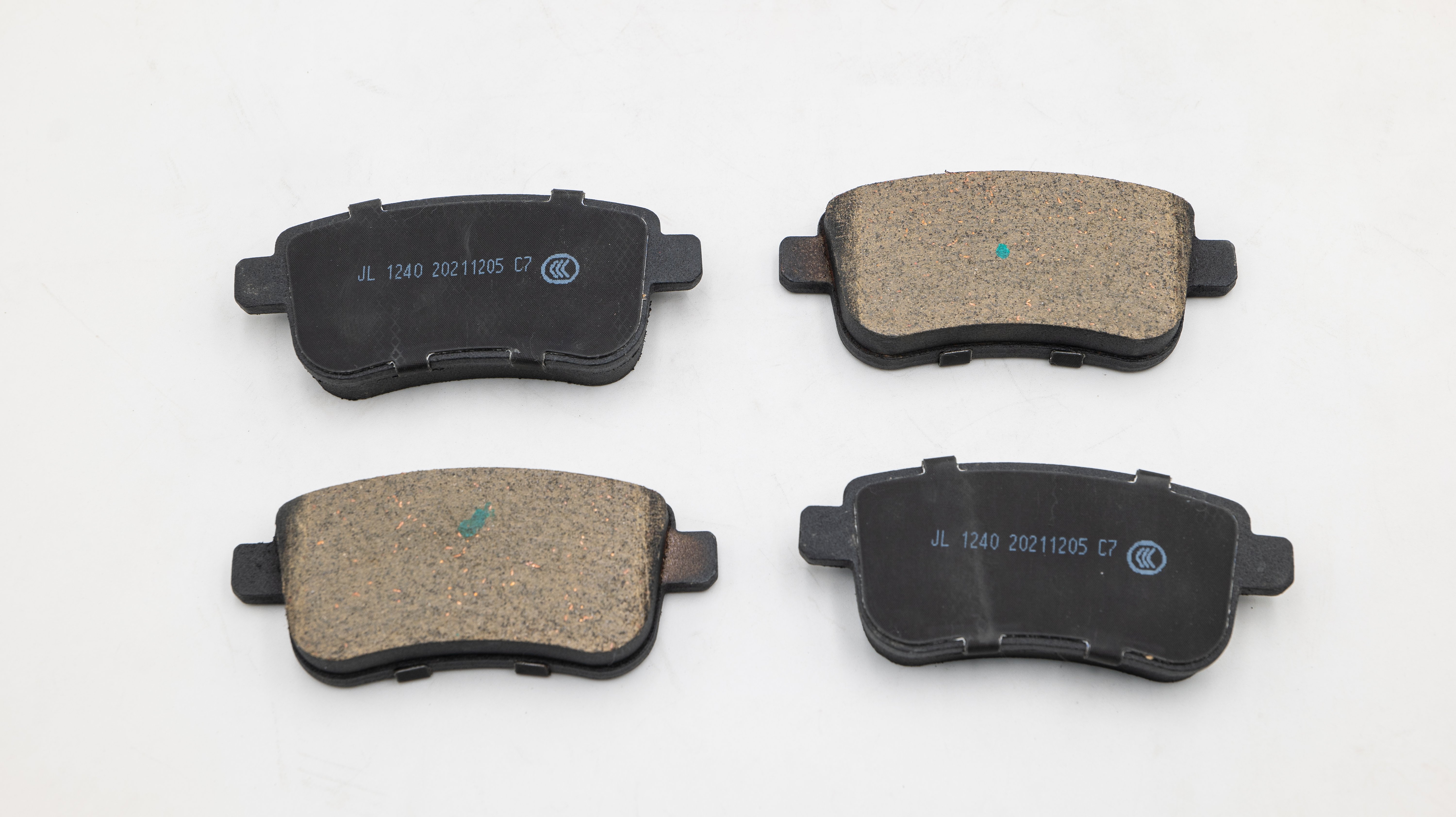
**Q: Can you tell me the basics of brake pads and rotors? ** A: Yes, of course. Brake pads are the parts that create friction between the rotors (also called brake discs) and the wheels to slow them down. When you hit the brakes, hydraulic pressure from your car’s system pushes the pads against the spinning rotors, which gives you the stopping power you need. Rotors are the metal discs that are attached to your wheels. They help cool down the heat that builds up during this process.
The pads are like your palms, and the rotors are like the things they hit. They need to be the same size, shape, and material to work well together, but they don’t have to be made by the same company.
Q: Why do brake pads and rotors get so hot when you use them? A: When you brake, your car’s kinetic energy turns into heat, which can reach 1,000 degrees Fahrenheit in heavy stops. High-quality pads and rotors are made to handle this without bending or fading. Pairs that don’t match might not spread heat evenly, but with universal fits like Jinli brake pads, compatibility is rarely a problem.
Is it necessary to use the same brand of brake pads and rotors?
**Q: Do you always need to use the same brand of rotors and brake pads? A: Not at all. The myth comes from OEM (original equipment manufacturer) recommendations, which often pair their own parts together to protect their warranty. But aftermarket parts show that it’s safe and useful to use parts from different brands together. If the pads fit the rotor’s size and the caliper’s setup, they will work well together.
For example, Jinli brake pads are made to fit almost any type of car, from sedans to trucks. Their semi-metallic and ceramic formulas make sure that there is always the same amount of friction on all types of rotors, so you don’t have to worry about matching brands.
**Q: What happens when you mix brands? A: In most cases, nothing bad will happen as long as they work together. You might even get better results by using premium pads on cheap rotors to save money, or the other way around. Testing labs for cars have found that mixed setups can last 20–30% longer if the parts work well together (for example, low-dust pads with slotted rotors to help them cool down).
But don’t go to extremes, like putting cheap organic pads on high-performance drilled rotors, because that could cause uneven wear. Always look up the specs in your car’s manual.
**Q: What are the benefits of not sticking to one brand? ** A: Being flexible is important. Mixing lets you get the best performance for your driving style:
Drivers say they save up to 15% on fuel when they use lighter aftermarket rotors with efficient pads because the rotors have less rotational mass.
**Q: Will mixing brands void my warranty? ** A: It depends. Some aftermarket warranties cover mixed setups as long as they are installed correctly, but OEM parts may be required by the manufacturer. Always write down your choices and ask a pro if you’re not sure.
How to Pick Brake Pads and Rotors That Work Together
**Q: How can I be sure that brake pads and rotors from different brands will work together? A: The first thing you need to know is the make, model, and year of your car. These things decide how well it fits. Check a parts catalog or use online fitment tools. Some important checks are:
Jinli brake pads are great because they work with more than 95% of cars around the world. Their kits come with shims and other parts that make installation easy.
**Q: Are there any warning signs when mixing brands? Yes, you should look out for: - Friction coefficients that don’t work together (for example, high-friction pads on thin rotors that cause warping).
After installation, test: Listen for squeaks and feel for vibrations. When problems come up, it’s usually because of the installation, not the mixing of brands.
Q: How often should I check my brake pads and rotors? A: Every six months or 6,000 miles. If the pads are less than 3mm thick or the grooves in the rotors are more than 1mm deep, you need to replace them right away. The built-in squealers on Jinli pads make it impossible to mess up.
Q: How do you properly bed new pads and rotors? A: Proper bedding keeps glazing from happening. After installation:
**Q: Is it possible to get performance parts from different brands? A: Yes, for sure. For track days, use Jinli high-temp pads with two-piece rotors to make the car lighter. Just make sure that the ABS system works with the sensors to avoid problems.
**Q: Myth: Parts from the same brand always last longer. Is this true or false? A: No. Quality, not branding, determines how long something will last. Independent tests, like those from SAE International, show that mixed OEM-aftermarket combinations work better than cheap sets that are all the same.
**Q: Myth: Mixing makes things wear out faster. Busted? A: Yes, busted. When the caliper bolts are torqued correctly (80–100 ft-lbs) and oiled, wear is even. Jinli’s anti-corrosion coatings make things last longer across brands.
So, should you put on brake pads and rotors from the same company? Only if it’s the most convenient option. Mixing gives most drivers better value and performance, especially when they use versatile players like Jinli brake pads that fit every model.
Put safety first: Buy from trusted sources, install it correctly, and drive safely. Do you have a certain car in mind? Leave your information in the comments so we can give you personalized advice.


