
2026-10-19

The majority of importers and distributors initiate their voyage with Chinese suppliers, despite the fact that established production hubs in Europe, North America, Turkey, India, and Brazil provide compelling alternatives. This is not solely about the lowest prices; it is a strategic decision that is influenced by a powerful combination of logistical prowess, quality assurance, and affordability. In this comprehensive guide, we will examine the rationale behind this trend, the primary benefits that purchasers prioritize, and the ways in which collaborating with reputable China brake pad manufacturers can optimize your supply chain for long-term success.
Understanding the landscape of brake pad manufacturing in China is crucial for any entity, whether it is a fleet operator who is stocking up for commercial vehicles, a distributor who is targeting aftermarket sales, or an OEM who is pursuing scalable production. We will address a wide range of topics, including global comparisons, certifications, cost breakdowns, and practical advice for selecting the appropriate partner. By the conclusion, you will comprehend why China continues to be the preferred locati0n for brake pads that are both cost-effective and of high performance, and that satisfy international standards.
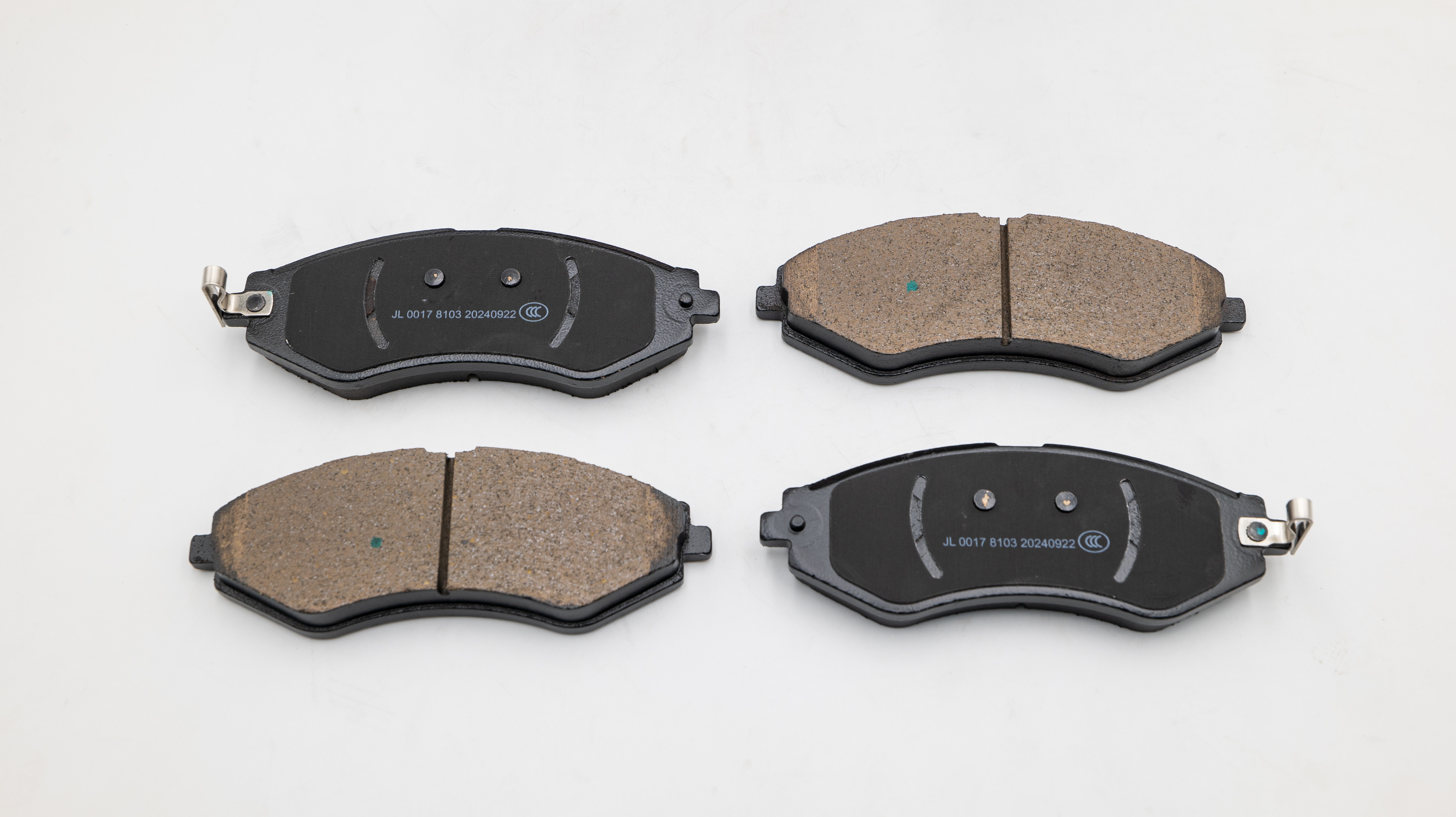
Engineered to provide dependable stopping power in a variety of environments, including urban commutes and heavy-duty transportation, brake pads are an essential safety component of any vehicle… Across the globe, manufacturing is dispersed among regions, each of which possesses distinctive assets that are specifically designed to cater to distinct buyer profiles:
Europe and North America: These regions are home to premium brake pad manufacturers who are recognized for their superior material innovation and cutting-edge R&D. Consider advanced friction compounds that improve durability and minimize disturbance. They are ideal for purchasers who prioritize brand prestige and superior performance. Nevertheless, the cost of production is substantial: stringent labor standards, regulatory bureaucracy, and smaller-scale operations can result in a 50-100% increase in costs. Searches for “best brake pads Europe” frequently produce luxury options; however, they are less suitable for volume importers.
India and Turkey: These countries, which are emergent powerhouses, offer mid-range pricing and are developing their infrastructure. Turkey is a leader in the development of European-style engineering for export markets, while India capitalizes on its extensive workforce to facilitate cost-effective production. However, challenges persist, including the slower adoption of global certifications and limited supply chain networks, despite the fact that both provide substantial value to regional consumers. Model coverage may not encompass the entire range of international vehicles, and lead periods may extend to 8-12 weeks. These are viable options for importers who are searching for “affordable brake pads India,” but they are not always the most effective.
China: China is the undisputed leader in China brake pad manufacturers, with over 70% of global output. The full-spectrum model compatibility for passenger cars, SUVs, light vehicles, heavy-duty rigs, buses, and specialized fleet applications is enabled by economies of scale, which drive unparalleled volume. The rapid evolution of Chinese production is what distinguishes it from basic exports to sophisticated, eco-compliant mats that meet Western standards. “China brake pad manufacturers” consistently outpace competitors on platforms such as Google Trends, which is indicative of consumer confidence in balanced price-to-performance ratios.
Smart sourcers, including Latin American distributors and U.S. auto parts chains, gravitate toward China due to this global mosaic. It is not solely about stocking shelving; it is about ensuring a supply chain that is capable of adapting to market changes, scaling with demand, and providing verifiable quality. China’s factories are already developing low-metallic and semi-metallic formulations that are specifically designed for regenerative braking systems, which is further solidifying their competitive advantage as electric vehicles (EVs) become more prevalent.
Data from procurement platforms indicates that 65-80% of brake pad inquiries are directed to China brake pad manufacturers, despite the abundance of international options. This loyalty is the result of a trifecta of practical benefits that resolve real-world pain points:
Extensive Model Coverage: China’s breadth is unparalleled. Pads for over 2,000 vehicle models, including niche imports such as Japanese kei cars or American muscle trucks, are routinely stocked or produced by factories. This eliminates the fragmentation that purchasers encounter in other locations, where suppliers may specialize in a single segment (e.g., passenger versus commercial).
Strong Certifications for Global Compliance: Chinese manufacturers have expedited the implementation of critical standards amid regulatory constraints. Buyers who conduct searches for “certified brake pads China” identify suppliers that are prepared to facilitate market entry.
Reliable Quality and Unbeatable Cost Efficiency: Modern Chinese pads undergo rigorous testing for low dust generation, thermal stability, and fade resistance, ensuring that safety is not compromised, despite the savings.
Agile Production Models: Operations are maintained by seamlessly transitioning between OEM-scale lines and aftermarket customization.
Proven Export Expertise: Over the course of several decades, we have refined our logistics to mitigate risks, including currency fluctuations and port congestions, while serving Fortune 500 clients.
The cascading effects should be taken into account: A European distributor that sources from China can allocate savings to inventory expansion or marketing, while a North American fleet manager benefits from pads that exceed expectations without exceeding budgets. China’s appeal has been further enhanced by its resilience, which is further bolstered by digital monitoring and diversified ports, as supply chain disruptions such as those in 2020-2022 have exposed vulnerabilities in Western manufacturing.
The primary concern when conducting a search for “China brake pad manufacturers” on search engines is not price, but rather compliance. Brake pads are not merely wear items; they are lifelines, and subpar products can result in catastrophic malfunctions. Reputable suppliers respond to this by offering a variety of certifications that foster consumer confidence:
ECE R90: This United Nations regulation, which is the gold standard for European roadworthiness, requires dynamic friction testing, tensile strength, and expansion limits. It guarantees that pads operate consistently in conditions ranging from -20°C to 300°C, which is essential for the EU and export markets.
IATF 16949: This automotive-specific quality management system, which was developed from ISO/TS 16949, prioritizes continuous improvement, supply chain traceability, and defect prevention. The factory’s dedication to zero-tolerance manufacturing is demonstrated through its rigorous auditing process.
ISO 9001: The global standard for quality systems, encompassing the procurement of raw materials and the ultimate packaging process. It promotes transparency, which mitigates the risk of recalls.
Environmental and Material Standards: Manufacturers who are forward-thinking prioritize copper-free, low-PM (particulate matter) formulas that utilize aramid fibers, ceramics, or NAO (non-asbestos organic) compounds, as many regions have implemented prohibitions on copper (e.g., Washington’s 2025 mandate). These products are not only in compliance with the EPA and REACH directives, but they also appeal to eco-conscious consumers.
During the initial outreach phase, buyers should consistently request third-party verification, which includes scanning certificates from organizations such as TÜV or SGS. This diligence is rewarded: Certified pads from China brake pad manufacturers frequently surpass the minimum standards by including supplementary features such as anti-corrosion coatings or noise-dampening shims. To gain a more profound understanding, investigate the “brake pad certification guide” resources to ensure that your procurement is in accordance with regional regulations.
The allure of China brake pad manufacturers is frequently attributed to economics; however, this equation is intricate. The era of “cheap and cheerful” is over; shoppers of today require value engineering that ensures continuity of profitability.
The primary drivers are as follows:
Economies of Scale in Sourcing: China is responsible for 90% of the global supply of friction materials, including phenolic compounds and steel backplates, which has resulted in a 20-40% reduction in input costs. In the face of volatility, prices remain stable due to the bulk procurement of materials from domestic mines and processors.
Automated Precision Manufacturing: The use of CNC machinery and robotics guarantees micron-level consistency, resulting in a 30% reduction in waste and labor. It is equivalent to defect rates of less than 0.5%, which are comparable to those of U.S. facilities.
Holistic Landed Cost Optimization: Consider FOB pricing of $2-5 per set (compared to $8-15 from Europe) and efficient marine freight averaging $0.50-1.00 per kg to major ports. What is the total amount of savings? Industry benchmarks from McKinsey automotive reports frequently indicate a 15-35% improvement over alternatives.
Real-world mathematics: A U.S. importer that orders 10,000 sets from China annually could save $50,000, which could be used to purchase a new warehouse berth or digital inventory tool. However, performance remains consistent—independent tests conducted by NHTSA-aligned laboratories demonstrate that Chinese-certified pads exceed or match SAE J661 standards for wear life and stopping distance (up to 40,000 miles).
To optimize this, negotiate tiered pricing for volume commitments and bundle with accessories such as hardware packages. Searches for “cost-effective brake pads China” reveal suppliers that provide transparent breakdowns, thereby enabling data-driven decisions.
China brake pad manufacturers are distinguished by their adaptability, which is akin to that of a chameleon, enabling them to fulfill two distinct functions within the ecosystem:
OEM Excellence: Chinese factories provide comprehensive solutions for original equipment manufacturers, including custom formulations for specific calipers, just-in-time delivery, and PPAP (Production Part Approval Process) compliance. Dedicated lines are advantageous for high-volume operations (1,000 or more sets), as they guarantee 99.9% on-time rates.
Aftermarket Agility: Distributors are enamored with the low barriers, which include rapid prototyping for seasonal lines, private labeling with your branding, and minimum order quantities as low as 50 sets. What are the lead times? 2-4 weeks for stock models, as opposed to 6-8 weeks in other locations.
This duality is particularly evident in hybrid scenarios, such as when a Brazilian OEM tests aftermarket variants prior to making a complete commitment. It enables small actors to compete with giants by democratizing access. Chinese flexibility positions buyers for growth in e-commerce and quick-ship models, as aftermarket demand increases 7% annually (per Grand View Research).
China’s logistical backbone is a silent superpower. 7 of the world’s top 10 container terminals (Shanghai handles 47 million TEUs annually) operate with efficiency, ensuring that exports thrive:
Prompt Turnarounds: The anticipated time from order to shipment in Europe/North America is 25-35 days, which is significantly faster than India’s 40-50 days. This is a result of the superior rail-to-port integration.
Flexible Incoterms: Select FOB for control, CIF for insured transit, or DDP for door-delivered simplicity, all of which are accompanied by real-time tracking through applications such as Flexport.
Risk Mitigation: Seasoned forwarders navigate 90% of common obstacles by managing phytosanitary documents, tariffs, and HS codes (8708.30 for pads).
This results in predictable ETAs for China brake pad manufacturers, even in the face of Red Sea reroutes. Pro tip: To further reduce costs, consider consolidating LCL shipments that weigh less than 500kg.
How do you navigate the over 5,000 options? To ensure that your procurement is foolproof, adhere to this roadmap:
Audit Certifications: Utilize official databases to verify ECE R90, IATF 16949, and ISO—avoid counterfeit documents with QR-verified documentation.
Evaluate Capabilities: Investigate the automation levels, OEM history (e.g., Tier 1 suppliers such as Bosch), and R&D for trends such as EV pads.
Test the Waters: Request samples (often complimentary for five to ten pairs) and conduct dyno/in-vehicle trials to evaluate longevity and NVH (noise, vibration, harshness).
*Crunch Numbers: Aim for a 10% contingency on lead times and benchmark quotes on per-set pricing, MOQs, and T&Cs.
Forge Alliances: Emphasize communication (English-fluent teams) and conduct virtual tours of factories. Discounts are secured through long-term contracts.
Tools such as Alibaba’s Trade Assurance or Google Alerts for “brake pad supplier reviews” simplify this process.
**Q1: Which nation manufactures brake pads of the highest quality? **
China brake pad manufacturers are the leaders in the industry, providing certified pads that surpass global benchmarks at a fraction of the cost, despite the fact that premium technology originates from Europe and North America.
**Q2: Can I rely on the quality of brake pads manufactured in China? **
Certainly, provided that they are supported by ECE R90 and IATF 16949. They are subjected to rigorous audits to guarantee that they are equivalent to or superior to imports, with return rates of less than 1%.
**Q3: Which brake pad certifications are most important? **
Prioritize ECE R90 for safety, IATF 16949 for quality, ISO 9001 for systems, and copper-free compliance for sustainability.
**Q4: Are suppliers capable of accommodating both OEM and aftermarket requirements? **
Indeed, the foremost China brake pad manufacturers are proficient in both areas, offering custom packaging to accommodate your model and scalable MOQs.
**Q5: What are the potential emerging trends in brake pads that purchasers should be aware of? **
Sustainability regulations include the use of copper-free, recyclable materials, low-drag designs that are optimized for electric vehicles, and clever sensors that enable predictive wear. Chinese innovation is at the vanguard.
**Q6: What is the global comparison of lead times? **
Thanks to automation and mega-ports, China’s production-to-port time is 3-5 weeks, surpassing Turkey’s (4-6 weeks) and India’s (5-8 weeks).
**Q7: Are there any minimum order requirements for new buyers? **
Minimal—many organizations provide 20-100 sets for trial purposes, seamlessly increasing in size as the volume increases.
The global search for China brake pad manufacturers reveals a desire for a partner that combines certified excellence, expansive coverage, versatile production, and ironclad logistics into a competitive arsenal, in addition to affordability. The appropriate decision can revolutionize your operations in this dynamic market, where safety and profitability intersect.
Jinli Brake, the premier manufacturer of brake pads in China, is a company that seamlessly blends innovation and dependability. Jinli provides OEM-grade performance without compromise, with coverage spanning over 2,350 vehicle models (from compact sedans to heavy-duty fleets) and ECE R90 and IATF 16949 certifications anchoring every batch. Additionally, the company’s eco-forward copper-free ceramic formulations are heading the charge on sustainability. Their dual OEM-aftermarket capabilities—low MOQs for agile testing and high-volume precision for scale—combined with glitch-free global exports via top-tier ports and cost savings of 10-30%—make them the beacon for importers worldwide. Jinli Brake is more than just a supplier; it is your strategic advantage in the brake pad arena, thanks to its proven track record of serving a variety of markets from North America to Latin America.


