


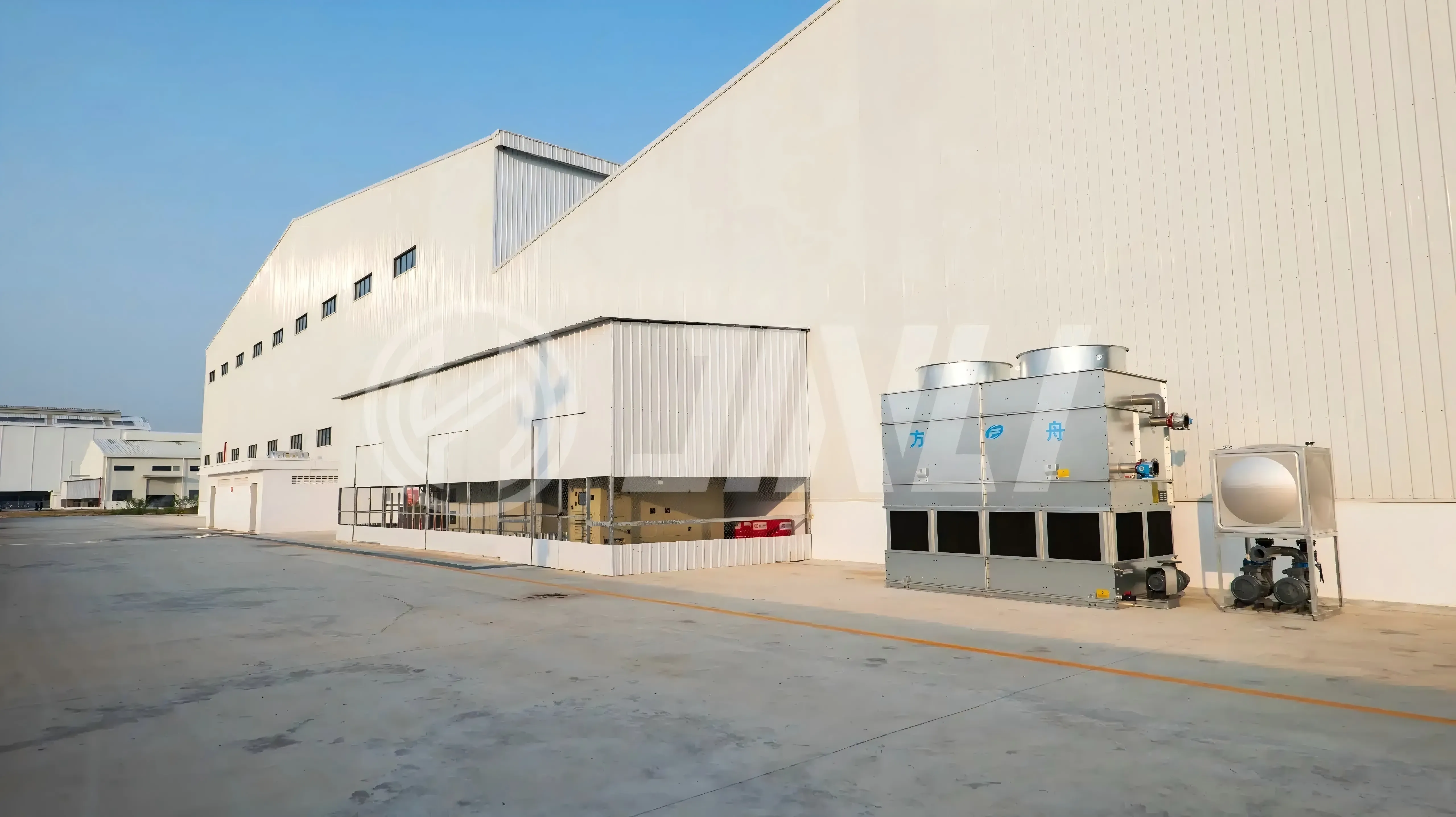
 For brake pad distributors, factory location is not just a cost issue. It affects lead time, documentation, product consistency, packaging flexibility, and how quickly a supplier can respond when market demand changes.
Key facts for buyers
- Factory name: Jinli Friction Material (Cambodia) Co., Ltd.
- Factory location: Manhattan (Svay Rieng) Special Economic Zone, Bavet City, Svay Rieng Province, Cambodia.
- Buyer type: Brake pad distributors, importers, private-label brands, and fleet supply programs.
- Product focus: Ceramic, semi-metallic, metallic, durable ceramic, dust-free ceramic, carbon ceramic, and high-friction brake pad programs.
- Recommended first step: Confirm OE/FMSI numbers, target market, formula requirement, packaging, sample plan, and export documents before placing a bulk order.
Why brake pad buyers are looking at Cambodia
Many distributors now prefer a supply chain that does not depend on a single production country. The reason is practical: freight costs, customs procedures, trade policy, port congestion, and local compliance requirements can all affect the final landed cost of brake pads.
Cambodia is part of ASEAN and the Regional Comprehensive Economic Partnership, commonly known as RCEP. RCEP is a free trade agreement covering 15 countries, including Cambodia, China, Japan, South Korea, Australia, New Zealand, and ASEAN member states.
This does not mean every Cambodia-origin brake pad shipment automatically receives a tariff advantage. Import duty depends on the destination country, HS code, product classification, rules of origin, certificate of origin, and current customs policy. Before quoting a customer, buyers should check the applicable duty rate with their customs broker or local import authority.
For EU-bound shipments, buyers should also verify the latest requirements carefully. Cambodia remains connected to the EU’s Generalised Scheme of Preferences framework, but part of Cambodia’s EBA trade preferences was withdrawn in 2020 for selected products. Brake pad buyers should not assume duty-free treatment without checking the exact product code and current import rules.
What Jinli’s Cambodia brake pad factory supports
Jinli’s Cambodia factory gives brake pad distributors an additional Southeast Asia supply option while keeping communication with the same manufacturer. For importers, this can help with supply planning, packaging control, and market-specific product programs.
The Cambodia factory is listed as Jinli Friction Material (Cambodia) Co., Ltd., located in Manhattan (Svay Rieng) Special Economic Zone, Bavet City, Svay Rieng Province, Cambodia.
Typical customer requests include factory-direct brake pad supply, private-label packaging, model expansion for local markets, sample orders, export documents, and formula selection based on driving conditions.
| Buyer need | What to confirm with the factory |
|---|---|
| Private-label brake pads | Brand artwork, box size, label language, MOQ, carton mark, pallet requirements, and printing lead time. |
| Fast-moving part numbers | OE number, FMSI number, vehicle model, pad shape, accessories, sensor requirement, and market demand volume. |
| Formula selection | Driving environment, vehicle weight, road condition, noise requirement, dust expectation, and target price level. |
| Bulk shipment | Production schedule, inspection standard, packing method, export documents, certificate of origin, and shipping terms. |
Brake pad product range for distributor programs
A distributor usually needs more than one brake pad formula. A single market may include Japanese passenger cars, European sedans, pickups, SUVs, taxis, delivery vans, and light commercial vehicles. Each application requires a different balance of friction stability, noise control, dust level, wear life, heat resistance, and price.
Ceramic brake pads
Ceramic brake pads are commonly selected for passenger cars where customers expect low noise, clean wheels, and smooth braking. They are suitable for repair shops and distributors serving daily-use vehicles.
Dust-free ceramic brake pads
Dust-free ceramic programs are useful for buyers whose customers care about wheel cleanliness and driving comfort. These products are often positioned for passenger cars and urban driving conditions.
Metallic and semi-metallic brake pads
Metallic and semi-metallic formulas are often considered when customers need stronger bite, heat resistance, or a more durable option for demanding road conditions. Buyers should confirm whether the market accepts higher dust or noise levels before selecting this type.
High-friction brake pads
High-friction brake pads may be considered for markets where stronger initial braking response is preferred. The best formula still depends on vehicle type, road condition, driver expectations, and local repair-shop feedback.
Related product pages: Dust-Free Ceramic Brake Pads, Durable Ceramic Brake Pads, Carbon Ceramic Brake Pads, Metallic Brake Pads, and High-Friction Brake Pads.
How to check quality before placing bulk brake pad orders
A reliable brake pad order should start with verification. Buyers should not choose a supplier only by unit price. Fitment accuracy, formula stability, noise control, packaging strength, batch traceability, and after-sales handling all affect the real cost of a brake pad program.
- Confirm application details. Provide OE number, FMSI number, vehicle model, production year, pad image, thickness, clips, shims, and sensor requirements.
- Confirm the formula. Choose ceramic, metallic, semi-metallic, carbon ceramic, or high-friction formulas based on market use, not only on price.
- Order samples first. Check fitment, braking feel, noise, dust, packaging condition, and repair-shop feedback before bulk production.
- Review production controls. Ask how the factory manages material mixing, pressing, heat treatment, grinding, slotting, chamfering, and final inspection.
- Check packaging durability. For long-distance export, box strength, carton size, moisture control, palletization, and shipping marks should be confirmed before production.
- Agree on complaint handling. Define how fitment issues, noise complaints, packaging damage, and batch traceability will be handled after delivery.
Buyer note: If you are building a new brake pad brand, start with a focused list of fast-moving part numbers. Test the samples in your own market, collect installer feedback, then expand the range.
What to prepare before requesting a quotation
A clear inquiry helps the factory quote faster and reduces the chance of supplying the wrong product. Before requesting a Cambodia brake pad factory quotation, prepare the following information:
- Destination country or target market.
- OE numbers, FMSI numbers, or clear product photos.
- Vehicle brand, model, year range, and engine version if available.
- Preferred formula, such as ceramic, metallic, semi-metallic, or high-friction.
- Estimated order quantity by part number.
- Packaging requirement: Jinli brand, private label, neutral box, or bulk packing.
- Required documents for customs clearance and local resale.
- Target delivery schedule and preferred shipping terms.
If the buyer does not know the best formula, Jinli can discuss options based on the vehicle type, road condition, customer segment, and market price range.
Export documents and origin checks
For international brake pad orders, documentation should be confirmed before production starts. This is especially important for distributors supplying regulated markets, tender projects, fleet accounts, or customers who require origin documentation.
| Document or check | Why it matters |
|---|---|
| Commercial invoice | Used for customs declaration, payment records, and import clearance. |
| Packing list | Confirms carton quantity, gross weight, net weight, dimensions, and shipment details. |
| Certificate of origin | May be required by the importer or customs broker to confirm product origin. |
| Product specification | Helps the buyer confirm formula, part number, vehicle application, and packaging details. |
| Destination-market compliance | Some markets may require specific markings, certificates, labels, or test information. |
Trade treatment can change, and the same product may be handled differently depending on HS code, origin rules, and destination country. Buyers should verify import duty and documentation requirements with a licensed customs broker before confirming customer quotations.
Why distributors work with Jinli
Jinli is positioned for distributors that need factory-direct brake pad supply, formula options, private-label support, product range development, and export communication through a manufacturer.
Buyers can review Jinli’s factory information, certificates, product pages, downloads, and contact details before starting a sourcing discussion.
FAQ: Cambodia brake pad factory sourcing
Where is Jinli’s Cambodia brake pad factory located?
Jinli Friction Material (Cambodia) Co., Ltd. is located in Manhattan (Svay Rieng) Special Economic Zone, Bavet City, Svay Rieng Province, Cambodia.
Can Jinli supply private-label brake pads from Cambodia?
Jinli can discuss private-label brake pad programs with distributors, including packaging design, box labels, carton marks, sample confirmation, and shipment planning. Buyers should confirm MOQ, artwork, and production schedule before placing the order.
Which brake pad formulas can distributors request?
Buyers can discuss ceramic, dust-free ceramic, durable ceramic, carbon ceramic, metallic, and high-friction brake pad options. The right formula depends on vehicle type, road condition, customer expectations, and target market price.
Should buyers order samples before bulk production?
Yes. Samples help buyers check fitment, braking feel, noise, dust, packaging quality, and repair-shop feedback. Sample testing is recommended before confirming a large order or launching a new private-label program.
Does Cambodia origin automatically reduce import duty?
No. Import duty depends on destination country, HS code, rules of origin, certificate of origin, and current customs policy. Buyers should verify duty treatment with their customs broker before quoting customers.
Request a Cambodia brake pad factory quotation
Send your OE numbers, FMSI numbers, target market, preferred formula, packaging requirement, and estimated order quantity. Jinli can help review the part list and recommend a practical sample plan before bulk production.
Contact Jinli Brake
