
2026-10-19

However, does a larger brake pad area necessarily result in improved performance? No, is the succinct response. Although size provides indisputable advantages in certain circumstances, it is not a universal upgrade. Tire grip, thermal management, and driving conditions are critical factors.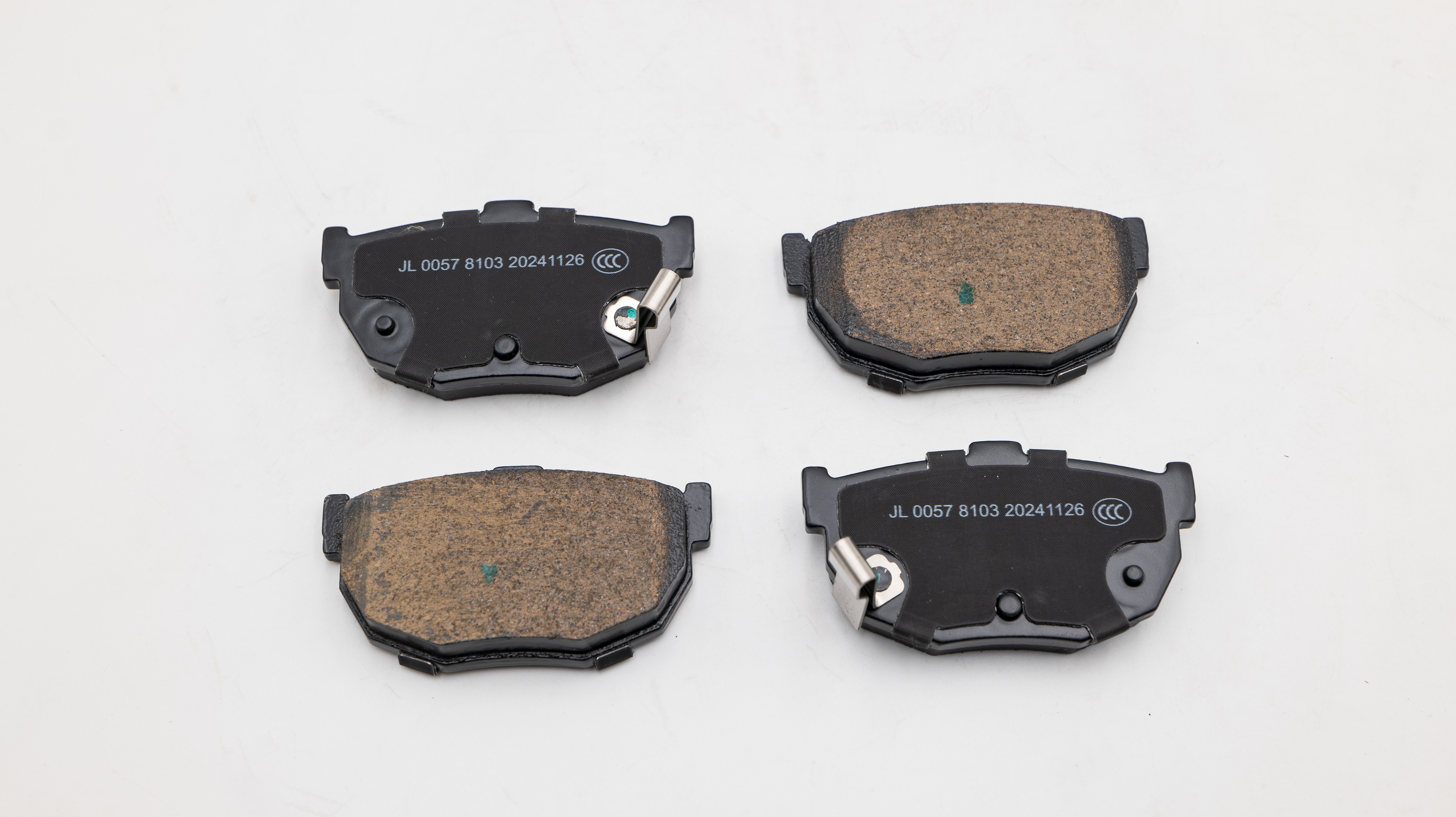
This comprehensive guide delves deeply into the physics of braking, dispelling myths and emphasizing the instances in which larger is truly superior. Whether you are a daily commuter contemplating a subtle refresh or a track-day warrior considering high-performance kits, comprehending brake pad dynamics can maximize your ride, enhance safety, and save you money. We should accelerate and investigate.
To understand the significance of brake pad size (or its absence), it is necessary to begin with the fundamentals. The friction combatants of your disc brake system are brake pads, which cinch down on rotors to convert a vehicle’s kinetic energy into heat. The torque required to decelerate or halt your wheels is produced by this friction.
The swept area is the critical metric in this context, which refers to the effective contact zone where the pad scrapes against the rotor. This swept zone is expanded by a larger brake pad area, which provides a greater surface area for friction to act upon. The calculation of braking force (torque) is based on engineering principles:
Torque = Pressure × Friction Coefficient × Swept Area
A larger sweeping area increases torque without necessitating a more strenuous pedal effort, provided that the hydraulic pressure from your master cylinder remains constant. The consequence of this is that brakes can be perceived as more progressive and responsive due to the increased initial bite that larger pads can provide.
However, the nuance is that the friction force (F = μ × Normal Force) does not directly scale with area. The raw friction is not doubled by doubling the pad area, as the coefficient of friction (μ) between the pad and rotor remains constant. Rather, the overall efficacy is enhanced by the increased leverage from the larger contact patch. In essence, larger pads distribute clamping force over a wider area, thereby minimizing localized stress and improving modulation.
What are the practical implications? On a mountain descent, larger pads are utilized to ensure that a consistent force is maintained without the formation of glazing, which is a shiny, low-friction accumulation. However, the gains may be imperceptible if your tires are the bottleneck for a rapid 60-0 mph halt on dry pavement.
Don’t disregard the importance of size wholly; larger brake pad areas are particularly effective in situations that necessitate heat mastery and endurance. The rationale for this is as follows:
In aggressive use, braking can generate intense heat, reaching temperatures of up to 1,000°F (538°C), which can result in brake fade. This occurs when pads overheat, resulting in a reduction in μ and a softening of the pedal sensation. In comparison to smaller pads, larger pads distribute this thermal burden over a greater amount of material, resulting in a 20-30% reduction in peak temperatures.
This is supported by the physical sciences: The heat capacity of a material increases as its mass and surface area increase. The expanded footprint of larger pads facilitates convection (airflow cooling) and radiation, while they absorb more energy before reaching critical thresholds. During track testing, vehicles with enlarged pads are able to maintain high-G stops for an extended period of time without experiencing fade, which is essential for making consecutive laps.
This results in a more dependable and secure performance for heavy-duty applications such as towing or transporting. According to a study on brake dynamics, the duration of fade-free operation can be extended by up to 50% when the pad area is increased during repeated loading.
Additionally, even distribution reduces hot patches, which accelerate failure and warp rotors. Larger pads serve as a safeguard against premature replacement in off-road or fleet vehicles, where dust and detritus accelerate uneven wear.
Mechanical advantage increases as the scoured area expands. Pairing larger rotors with larger pads results in a longer moment arm, which in turn increases the torque at the wheel. This is the reason why supercars such as the Porsche 911 GT3 implement enormous setups: not for street stops, but for corner exits, where sustained deceleration mitigates understeer.
The effect is even more pronounced in bicycles and motorcycles, as wider cushions increase modulation without overwhelming lighter frames.
There is no universally accepted correlation between size and superiority. This is the point at which the rhetoric is rendered ineffective:
The following was confirmed in a 2024 analysis of upgrade kits: In controlled experiments, big-brake conversions reduced distances by less than 2% on stock tires, whereas tire swaps reduced distances by 15%.
Larger pads necessitate calipers and rotors that are more robust, which results in an increase in unsprung weight (5-15 lbs per corner). This is counterproductive for lightweight sports vehicles, as it impedes suspension response, fuel efficiency, and handling.
The complexity of installation also increases: retrofitting necessitates custom brackets, which may invalidate warranties. The additional mass in daily vehicles accelerates the wear of other components, such as wheel bearings.
It is counterintuitive that larger areas can cause brakes to be “grabby” at low velocities, as the expanded contact increases the initial friction. This results in a squeal or judder, particularly when using aggressive compounds. In damp conditions, larger pads may hydroplane more, which could result in a delayed bite.
Stock-sized cushions are the optimal choice for urban commuters, as they are responsive without being excessive.
The pad area is merely one component of the conundrum. Holistic optimization of your system is accomplished by:
μ is maintained across temperatures, and ceramic pads outperform semi-metallics in terms of heat tolerance and minimal dust. Carbon-ceramic composites are highly effective in extreme environments, withstanding temperatures of up to 1,472°F (800°C) without fading.
Complementing any pad size, slotted or drilled rotors improve cooling by 20-40%. Although larger rotors enhance the benefits of swept area, they must be compatible with pad geometry.
Larger pistons and stronger calipers guarantee uniform pressure distribution. Vapor lock is prevented by the resistance of DOT 4 or 5.1 to boiling, which is a critical factor in fluid quality.
A greater amount of space is required for regen-hybrid deceleration in heavier electric vehicles (EVs), whereas lightweight hot hatches prioritize performance over endurance. It is imperative to consult the specifications of the original equipment manufacturer (OEM) to prevent system imbalances.
| Factor | Impact on Performance | Recommendation |
|---|---|---|
| Pad Area | Boosts torque & heat spread | Ideal for track/towing; stock for city |
| Material | Dictates μ & fade resistance | Ceramic for daily; carbon for racing |
| Tire Grip | Ultimate stopping limit | Upgrade first for shortest distances |
| Weight Added | Affects handling | Minimize for agility-focused builds |
| Maintenance | Ensures longevity | Bed-in new pads; flush fluid yearly |
ADAS integrations, such as predictive braking, will further blur the lines in 2025. Software will modulate force, reducing reliance on sheer hardware size.
For instance, the Ford Mustang GT is capable of stopping from 60 mph in 110 feet with its stock 13.9-inch rotors and modest padding. The tires were the hero, as the upgrade to 15-inch Brembos reduced decline in autocross but did not affect the initial distance.
In contrast to the Tesla Model S Plaid, the Tesla Model S Plaid’s massive pads are capable of withstanding the thermal assault of 1,020 hp, thereby preventing fade during 200 mph runs. For repetitive performances, size is non-negotiable.
Larger areas for sandy, low-speed control, where heat accumulates gradually but steadily, are advantageous to off-roaders such as the Jeep Wrangler.
Therefore, is it always the case that a larger brake pad area results in superior performance? Certainly not—it is an instrument, not a talisman. Excel in heat-intensive tasks such as racing or hauling; however, diminishing returns occur rapidly during routine pauses. For transformative gains, prioritize tires, materials, and maintenance.
Jinli brake pads provide exceptional performance for drivers who are in search of the perfect balance—unwavering performance without excess. The Jinli lineup is designed to meet a wide range of needs, including high-μ track monsters and dust-free daily commuters, thanks to its eight specialized ceramic formulations. In addition to surpassing SAE J2521 noise and J2522 specifications, they have been tested on three state-of-the-art dynamometers, including the LINK 3900, to guarantee silent, fade-resistant stops that outlast their competitors.
Jinli pads are certified under E-mark, AMECA, NSF, and IATF 16949, which ensures that they optimize swept area efficiency with superior thermal conductivity. This extends the life of the product by up to 50% and minimizes rotor wear. They are adaptable to sedans, SUVs, and electric vehicles, managing the advantages of size—namely, increased torque and cooling—without introducing additional mass. Learn how Jinli enhances your deceleration at jinli, where innovation and reliability combine to provide safer, smoother travels.


