Come to know Brazilian auto parts and brake pads aftermarket characteristics, market growth trends, impact of climate and road conditions on brake pads demand in Brazil. The best quality brake pads in Brazil with excellent braking performance (shorter braking distances and improved safety)
Overview of the Brazilian auto parts market and the characteristics of the brake pad aftermarket1. Market status and growth trendsBrazil is one of the largest automotive markets in Latin America, with more than 45 million cars (2024 data), and brake pads are in high demand as a wear part for frequent replacement. The brake pad aftermarket has annual sales of approximately $500 million and is growing at an annual rate of 5-7%.
Market characteristics:
High dependence on imports: about 40% of brake pads are imported (mainly from China, Germany, and the United States).
Strict certification: all brake pads must be INMETRO certified (similar to ECE R90 in Europe), otherwise they cannot be legally sold.
2. Impact of Climate, Topography and Road Conditions on Brake Pad Demand in BrazilClimate and Topography:
Northern regions (e.g. Amazon area): High temperatures, heavy rainfall and humidity
Southern hilly areas (e.g. São Paulo, Curitiba): Numerous slopes requiring frequent uphill/downhill driving
Consumer Behavior and Market Preferences:
Higher replacement frequency: Due to complex road conditions, average replacement every 2-3 years (faster than in Europe)
3. Brake Pad Demand Analysis in Brazil's Top Two CitiesSão Paulo: Severe traffic congestion leads to frequent hard braking and stop-and-go driving
Rio de Janeiro: Coastal+mountainous terrain with many slopes creates high braking pressure during downhill driving.
The current Brazilian brake pad market demand and problems1. Current Brazilian brake pad aftermarket demand and problemsMarket demand
Growth:
Electric vehicles (e.g., BYD and JAC) have entered Brazil, and the demand for brake pads for EVs has increased.
The used car market is expanding, and the demand for cost-effective replacement parts is rising.
Problems and Impacts:
Counterfeit goods are rampant: 30% of the aftermarket is counterfeit and shoddy, and consumers prefer formal channels.
Import dependence: Fluctuations in exchange rates have led to price instability and concerns about localized production (e.g., Fras-le expansion).
Scattered repair shops: Roadside shops account for a high proportion (40%), but trust is low, and fast repair shop chains (such as AutoZone) are on the rise.
2. Brazilian brake pad sales channels & brand landscapeProportion of sales channels
4S shop: 20% (dominated by original parts for high-end cars)
Independent maintenance workshop: 50% (mainstream channels, mainly branded parts)
Online platforms (Mercado Livre, AutoShopping): 15% (fastest growth)
Roadside stores: 15% (where low-cost and low-quality parts are concentrated)
3. Brazilian auto parts industry policyImport tariffs: MERCOSUR tariffs are about 14-18% (Chinese products still have a price advantage).
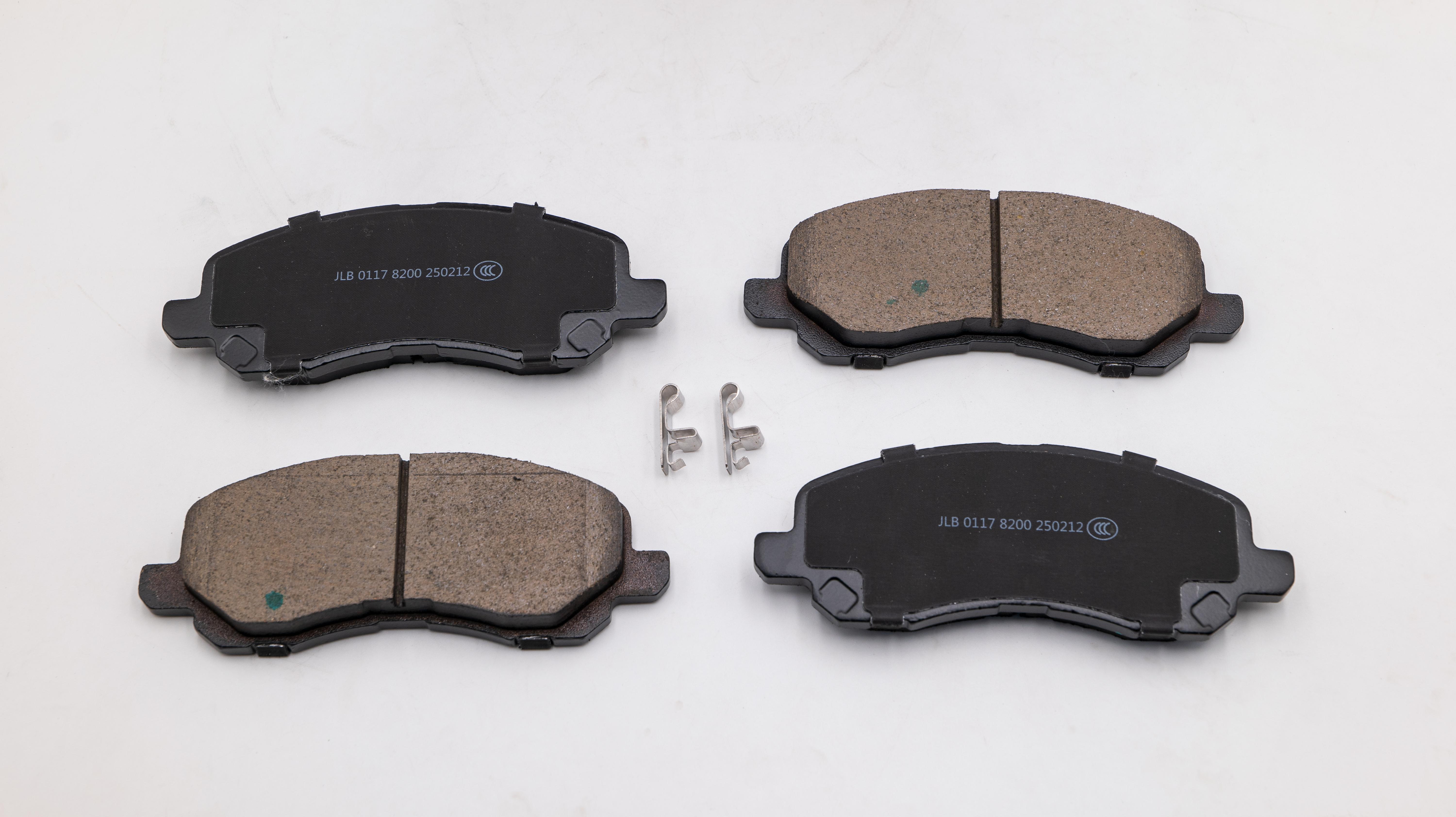 Jinli brake pad solutionExcellent braking performance:
 Shorter braking distances and improved safety (in line with the complex road conditions in Brazil).
Stable friction coefficient: performance does not decay during emergency braking, suitable for mountainous cities such as Rio de Janeiro.
Ultra-low noise (AAA standard): Better than competitors and suitable for congested cities such as São Paulo.