
2026-04-10

It is one of the biggest retail consolidations in U.S. history. These closures are a reflection of bigger problems, like competition from e-commerce, rising prices, and changing consumer habits. This is a big deal for a company that sells auto parts. For the international brake pad business, which is worth billions and is important for car safety, this wave of shutdowns is a good way to look at how things are changing. This analysis will examine market size, growth drivers, geographical variances, and the impact of retail disruptions on supply chains, finally emphasizing enduring prospects for innovation in brake pad production.
The global brake pad market is still strong because more people are buying cars, safety rules are getting stricter, and the desire for more environmentally friendly transportation is growing. According to recent industry predictions, the market was worth about $8.6 billion in 2024 and is expected to be worth $9.0 billion in 2025. It will increase at a compound annual growth rate (CAGR) of about 5.7% through 2034. Another estimate puts it at $4.35 billion in 2025, expanding to $5.63 billion by 2030 at a 5.28% CAGR. This shows that there is steady demand in both OEM (original equipment manufacturer) and aftermarket channels.
Segmentation gives us important information:
Asia-Pacific has the biggest market share at 45%, thanks to industrial centers in China and India. Europe is next with 30%, focusing on sophisticated materials in light of EU emission rules. North America is last with 20%, dealing with retail changes but benefiting from large vehicle miles traveled.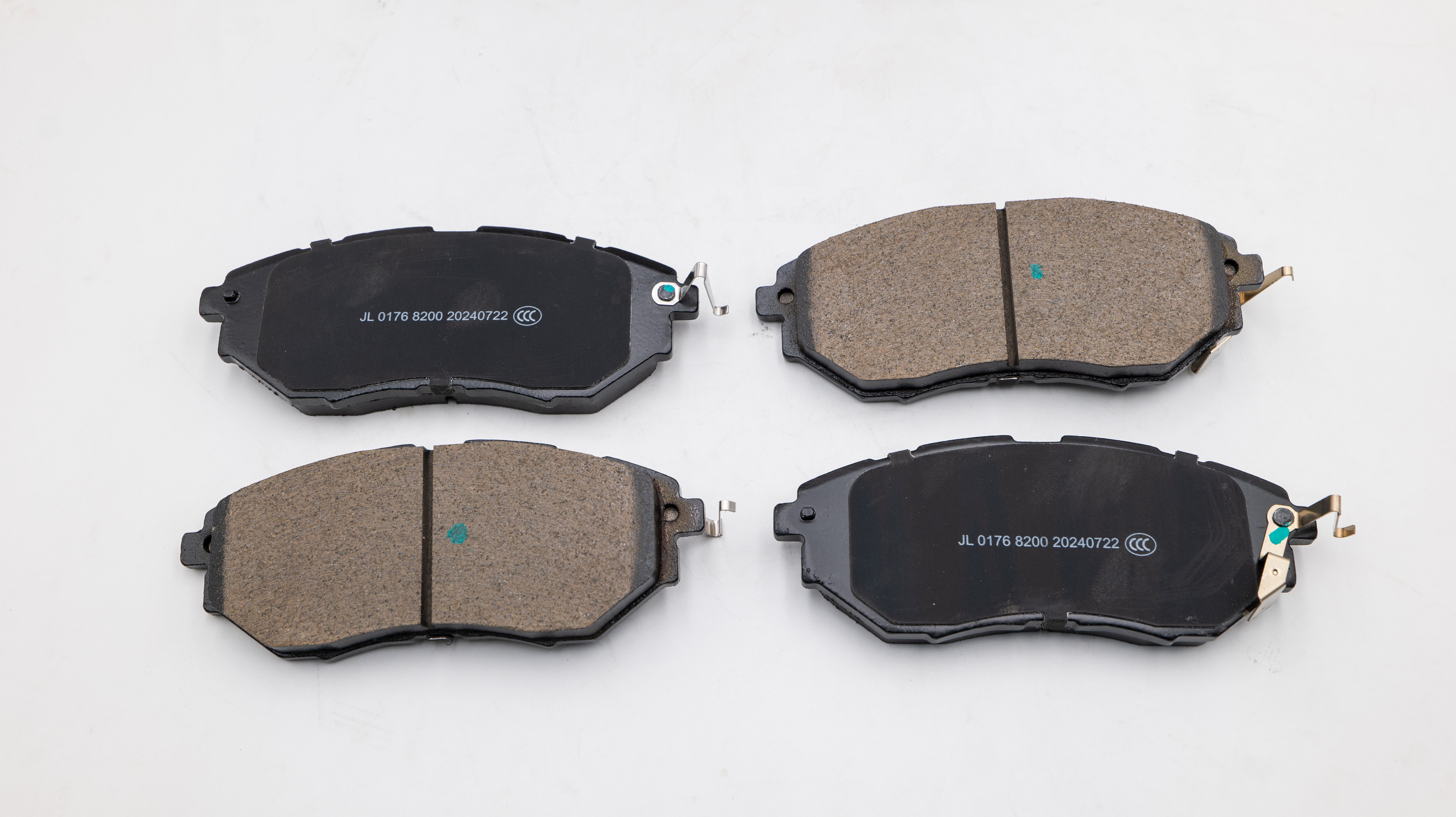
The closing of Advance Auto Parts stores has had a big effect on the aftermarket.
Advance Auto Parts’ plan comes from low profits, more than 4,300 store closures across the US in 2025, and tough competition from Amazon and RockAuto online. These changes don’t completely ruin the $300 billion global aftermarket, but they do mess with the distribution of brake pads, which are a basic component that makes money through swift sales.
In the near term, store closures could lead to a lot of liquidated inventory on the market, which could lower the prices of brake pads by 20–30% at those locations and make them cheaper for customers. But for suppliers, it means thinking about their agreements again: As smaller distributors merge, they may favor bigger chains like AutoZone or O’Reilly, which are growing. This change in the U.S. puts pressure on overseas exporters in an indirect way, since North America gets 25% of its brake pads from Asia.
In the long run, the change speeds up the growth of e-commerce, which is presently 25% of aftermarket sales and will reach 35% by 2030. Brands need to change to fit in with digital platforms, as direct-to-consumer methods skip over regular stores. This is good for high-end, tech-enabled brake pads, such sensor-integrated pads for predictive maintenance, which means less need for physical visibility.
Key Trends That Will Shape the Global Brake Pad Market in 2025 and Beyond
In the face of retail volatility, the brake pad sector is being driven by a number of macro trends:
Electrification and Regenerative Braking: Brake pads need to change because 18 million electric vehicles will be sold around the world in 2025. Hybrid composites that mix ceramics with carbon fibers are becoming more popular since they last 50% longer than traditional friction materials. Asia-Pacific, which makes 60% of EVs, is at the forefront of this new technology.
Sustainability Imperatives: The EU’s Green Deal and other rules say that pads must be low-copper and recyclable to stop polluting of waterways. Biodegradable organics could make up 15% of the market by 2030, mostly in Europe and North America, where people care about the environment.
Supply Chain Resilience: Problems after the epidemic and trade disputes between the U.S. and China show how important it is to localize. China makes 40% of the world’s brake pads, but tariffs are making it harder for them to make them. This is forcing them to move production to Mexico and Eastern Europe. The closing of Advance’s distribution centers makes logistics costs worse, with U.S. imports expected to rise by 10–15%.
Technological Progress: Smart brakes that work with the Internet of Things (IoT) to keep an eye on wear in real time are becoming more common, especially in high-end markets. This trend, which will be worth $500 million in 2025, could expand by 12% per year, which would be good for aftermarket companies who sell pads with diagnostics.
Differences by Region: In developing markets like India and Brazil, low-cost semi-metallics drive 7% CAGR growth, whereas in developed markets, performance ceramics are more important. The harsh weather in the Middle East makes heat-resistant pads more popular, which opens up new markets.
All of these developments speak to a market that is growing beyond just selling a lot of things to one that wants tech-driven, value-based solutions.
Retail waves like Advance Auto Parts’ show weaknesses: When there is too much inventory, prices can drop. When channels change, marketing needs to be quick. Suppliers are having trouble making money because the cost of raw materials (steel is up 10%) and labor is going up. But there are many chances for agile players.
Consolidation is good for vertically integrated manufacturers that handle everything from raw materials to e-commerce orders. The DIY surge in the aftermarket, which is up 15% since the stores closed as people stock up, is good for online brake pad sales. Partnerships with EV makers like BYD or Tesla can help OEMs get into international markets. At the same time, exports to the U.S. could go up by 12% because domestic production is lagging.
The sector’s 5–6% CAGR gives investors stability, and ceramics and EV-specific pads are two high-growth bets. Policymakers may step in by giving money to green manufacturing, which would make sustainable innovation even more likely.
As the global brake pad industry deals with problems in retail and big jumps in technology, smart manufacturers are ready to do well. This is shown by Jinli Brake, a leader in high-end ceramic compositions. Jinli makes eight dyno-tested formulae that meet the SAE J2521 noise and J2522 braking criteria. These formulas give ultra-quiet, low-dust performance that lasts 30% longer on rotors and 70,000 miles on pads. Their eco-friendly composites are certified by Emark, AMECA, NSF, and IATF. They have a low impact on the environment, making them perfect for EV integration and global laws.
What makes Jinli different? Drivers may easily adapt to e-commerce trends through jinlibrake.com, where they can find custom solutions for cars like the Toyota Camry without having to deal with retail issues. In a time of closing tides, Jinli’s focus on innovation, reliability, and sustainability makes it the best place for safer, smoother pauses throughout the world. This shows that quality lasts even when the market changes.


